How to Get Rid of Cockroaches for Good
Think you can solve a roach problem with a can of spray? Think again. That is not the real fight. The real fight is against an enemy you cannot see.
You see one cockroach. You squash it. Problem solved, right? It’s a tempting thought. But it's almost never that simple. From years of experience, I can tell you that a single roach is usually just a scout—a visible warning sign of a much larger, hidden colony you haven't discovered yet. If you have questions, call +1 855 224 3071 for fast answers.
One Roach Is Never Just One Roach
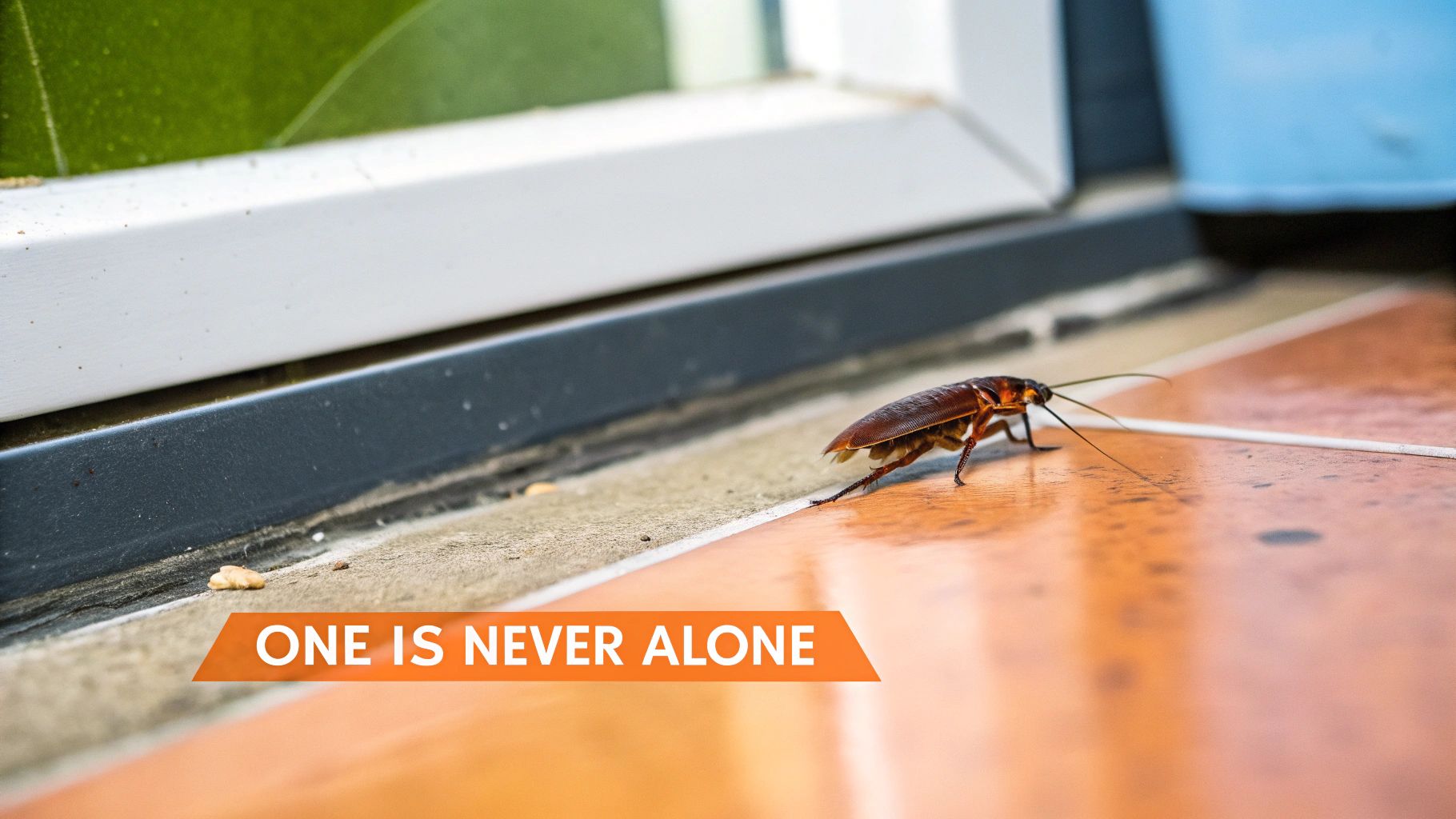
Spotting a lone cockroach scurrying across your kitchen floor feels like a minor annoyance. But that single insect is often the tip of the iceberg. Cockroaches are nocturnal masters of stealth, thriving in dark, undisturbed corners of your home.
By the time you see one out in broad daylight, it's a bad sign. It usually means their preferred hiding spots are so overcrowded that they're being forced out to find new territory.
This is why understanding how to get rid of cockroaches requires a total mindset shift. You're not just fighting one bug; you're taking on an entire hidden population. If you’ve seen one, there are likely dozens—or even hundreds—tucked away behind your walls, under appliances, or deep inside cabinets.
Need help figuring out how bad the problem is? Call +1 855 224 3071 for a professional assessment.
Why Cockroaches Are So Hard to Control
One of the biggest headaches with these pests is their incredible breeding speed. A single female can produce an egg case carrying about 12 young, and her offspring can explode into a population of over 800 cockroaches in just one year. A small problem can become a full-blown infestation in just a few weeks.
Their presence also pumps allergens into your home, which can make asthma and allergies significantly worse. You can learn more about how pest control reduces indoor allergens in this insightful article.
These pests are true survivors, and your home offers the perfect five-star resort for them:
- Food: Even the tiniest crumbs, a grease splatter behind the stove, or pet food left out overnight is a gourmet meal.
- Water: A leaky pipe under the sink, condensation on a window, or even a damp sponge provides all the moisture they need.
- Shelter: The dark, tight space behind your refrigerator or inside a wall void is their idea of a luxury condo.
A cockroach can live for a week without its head, survive for a month without food, and hold its breath for up to 40 minutes. This insane resilience is exactly why a casual, DIY approach almost always fails.
Identifying the Invader
Knowing which type of cockroach you're up against is the first critical step toward getting rid of them for good. Different species have different habits, which changes where you need to look and what treatments will actually work.
While there are thousands of species out there, only a few are notorious for invading homes. If you're not sure what you're seeing, don't guess—call +1 855 224 3071 for expert identification and a targeted plan.
Quick Guide to Common Household Cockroaches
Use this table to get a quick read on the enemy. Recognizing the species is half the battle.
| Cockroach Species | Appearance | Common Hiding Spots |
|---|---|---|
| German Cockroach | Small (about 1/2 inch), light brown with two dark stripes just behind the head. | Kitchens and bathrooms are favorites. Check behind refrigerators, under sinks, and deep inside cabinets. |
| American Cockroach | Large (up to 2 inches), reddish-brown with a yellowish figure-eight pattern on its head. | Basements, sewers, crawl spaces, and around pipes. They love warm, damp areas. |
| Brown-Banded Cockroach | Small (about 1/2 inch), light brown with two distinct yellowish bands across its wings. | Prefers drier, warmer spots like upper cabinets, behind picture frames, and even inside electronics. |
| Oriental Cockroach | Large (about 1 inch), dark brown or black with a greasy shine. Also called "water bugs." | Damp, dark, and cool places like basements, drains, and underneath porches. |
Once you have a good idea of what you're dealing with, you can start creating a real strategy to take back your home.
Your Immediate DIY Roach Control Plan
When you see a cockroach, your first instinct is probably to grab a can of bug spray. While it feels satisfying to blast that one roach, it does absolutely nothing to the dozens, or even hundreds, hiding in your walls and appliances.
Real cockroach control isn't about one-off kills. It's about systematically dismantling their entire support system.
Fast, decisive action is everything. Your goal is to make your home completely uninhabitable for them by launching a coordinated attack on their food, water, and shelter—starting now. If it already feels like too much, don't wait. Call +1 855 224 3071 for immediate, professional advice.
The Power of Baits and Gels
Forget the sprays that only kill on contact. The most powerful DIY tools are the ones roaches take back to the nest. Gel baits and bait stations are slow-acting poisons cleverly disguised as a tasty meal.
A roach eats the bait and carries it back to its hiding spot. When it dies, other roaches eat its carcass and feces, spreading the poison throughout the colony like a virus. This is the only way you’ll wipe out the hidden population you can’t see.
But for them to work, placement is everything.
- Under Sinks: Squeeze a small dab of gel or place a bait station in the dark corners where pipes enter the wall. This is a roach superhighway.
- Behind Appliances: Pull out your fridge, stove, and microwave. Roaches love the warmth from motors. Apply gel bait along the back edges and near those warm spots.
- Inside Cabinets: Tuck baits into the upper and lower corners, especially where you store dry goods like pasta, cereal, and flour.
- Near Water Sources: Cockroaches need water almost daily. Put traps near pet bowls (out of reach!), under the dishwasher, and behind the toilet.
Your Weekend Roach Blitz Checklist
You need to dedicate a weekend to a deep sanitation push. Think of this "roach blitz" as serving them an eviction notice by aggressively removing the three things they need to survive.
Day 1: The Kitchen Takedown
The kitchen is ground zero. This is where you’ll make the biggest dent in their resources.
- Empty and Clean All Cabinets: Take everything out. Vacuum every last crumb and piece of debris, then wipe all interior surfaces with a degreasing cleaner.
- Deep Clean Appliances: This is non-negotiable. Pull every appliance away from the wall. Scrub the floors, the walls behind them, and the sides of the appliances to remove years of built-up grease and food spills.
- Secure All Food: Transfer everything from cardboard boxes—cereal, flour, sugar, crackers—into airtight plastic or glass containers. Roaches can easily chew through cardboard.
- Manage Your Trash: Use a trash can with a tight-fitting lid and take it out every single night before bed. Never, ever leave dirty dishes in the sink overnight.
Key Takeaway: A cockroach can live for days on a tiny smear of grease or a few crumbs. Your cleaning has to be meticulous to have any real effect. If the mess feels overwhelming, our network of pros is ready to help. Call +1 855 224 3071.
Day 2: Securing the Rest of the Home
Once the kitchen is a fortress, roaches will migrate to find new resources. Now it’s time to lock down the bathrooms and other potential hotspots.
- Bathroom Deep Clean: Scrub toilets, sinks, and showers, focusing on where plumbing meets the walls and floor. Fix any dripping faucets immediately—that’s a constant water source.
- Declutter Living Areas: Roaches absolutely love hiding in stacks of newspapers, magazines, and cardboard boxes. Get rid of the clutter.
- Vacuum Everywhere: Use a vacuum with a HEPA filter to suck up live roaches, egg cases, and droppings from carpets, along baseboards, and under furniture. As soon as you're done, seal the vacuum bag in a plastic bag and throw it in an outside trash can.
Safety First: Especially with Kids and Pets
While you need to be aggressive, safety is the top priority, especially if you have children or pets. Baits and traps contain toxins, so careful placement is critical.
- Place baits out of reach: Always put gel baits and bait stations where little hands and curious paws can't get to them—deep inside locked cabinets or far behind heavy appliances.
- Read labels carefully: Every product is different. Follow the manufacturer's instructions for placement and handling to the letter.
- Consider safer alternatives: If you have toddlers or pets who get into everything, you might want to explore less toxic options. For anyone interested, our guide on a non toxic cockroach killer offers some great family-safe strategies.
Since roaches often appear near water, understanding how to handle them in common areas is crucial. For proven strategies, learning about addressing roaches in sinks can give you an edge. A thorough approach that combines aggressive treatment with deep cleaning is your best first line of defense.
Building a Roach-Proof Home for Good
You might think sealing a tiny crack under your door is just another weekend chore. It’s not. It’s building a fortress wall against an invading army. Killing the roaches you can see is just a temporary victory; the real win is making your home a place they can't get into in the first place.
Success isn't about killing more roaches—it's about making your home so uninviting they give up and move on. This is where you shift from reacting with a can of spray to proactively building a defense system that works 24/7.
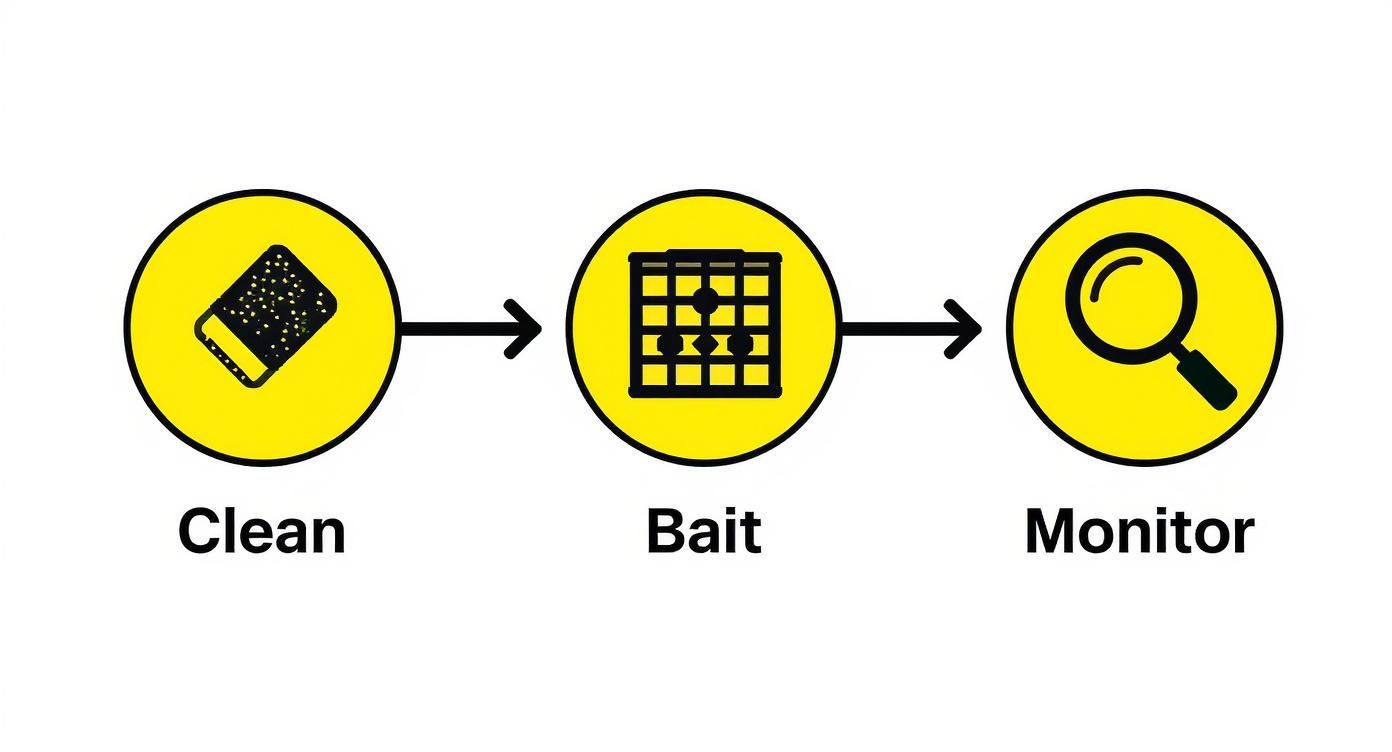
This process is a cycle: clean, bait, and monitor. It's not a one-and-done job but an ongoing strategy. If building these defenses feels overwhelming, our team can connect you with an expert. Just give us a call at +1 855 224 3071.
Sealing Every Entry Point
Roaches don’t need an open invitation. A German cockroach can flatten its body and squeeze through a crack just 1/16th of an inch wide. That's the thickness of a credit card.
Your first mission is to think like a roach. Grab a flashlight and hunt down every potential entryway into your home.
Here are the roach highways you need to shut down for good:
- Around Pipes: Get on your hands and knees and look under every sink. Those gaps where pipes meet the wall are superhighways for pests.
- Behind Appliances: Pull out the fridge, stove, and dishwasher. You’ll be surprised at the gaps and holes you find back there.
- Baseboards and Trim: Check where the floor meets the wall, especially in kitchens and bathrooms. Even tiny cracks are big enough.
- Windows and Doors: Make sure your weather stripping is solid. Any daylight you see around a closed door is an open door for a roach.
- Vents and Utility Lines: Openings for cables, gas lines, and vents are easy access points.
Grab a good quality caulk and start sealing. For bigger gaps, expanding foam is your best friend. This one task alone can slash the number of new roaches getting inside. If this feels like too big a job, a pro can handle it fast. Call +1 855 224 3071 to find a local expert.
Eliminating Moisture Havens
Here's a fact that surprises most people: roaches can go a month without food, but only about a week without water. This makes moisture your most powerful weapon against them.
Cockroaches don't just drink water; they absorb it through their bodies and are drawn to humid environments. A damp basement isn't just a basement—it's a cockroach spa.
Your job is to turn your home into a desert from their perspective.
- Fix Leaks Immediately: That slow drip under the sink isn't just annoying; it’s a life-support system for a roach colony.
- Improve Ventilation: Run the exhaust fan in the bathroom during and after every shower. If you have a damp basement, get a dehumidifier.
- Clean Up Spills: Wipe sinks dry before you go to bed. Mop up any spills right away and check around pet water bowls.
A dry home is an unappealing home for roaches. Tackling dampness issues and eliminating old musty smells at home often go hand-in-hand with making your space less attractive to pests.
Adopting a Roach-Proof Lifestyle
Long-term success comes down to habits. You’ve sealed their entrances and dried up their waterholes. Now, you have to cut off their food supply with military precision.
- Rinse Everything: That tiny bit of soda left in a can or smear of sauce in a jar is a feast for a roach. Rinse all recyclables thoroughly.
- Pet Food Management: Never, ever leave pet food out overnight. Store it in an airtight container and wash the bowls after your pet eats.
- Yard Maintenance: Roaches use mulch, firewood stacks, and leaf piles as staging areas right outside your foundation. Keep this stuff away from the house.
When you combine exclusion with sanitation, you're not just solving the current problem. You're building a home that roaches will simply pass by. For a deeper look at these strategies, check out our guide on how to prevent roaches. This proactive mindset is the only way to keep them gone for good.
Knowing When to Call a Professional Exterminator
Let's be honest. Calling a pro can feel like admitting defeat in your DIY pest war. But it’s not. It’s actually the smartest, most strategic move you can make when you’re outgunned. This isn’t about giving up; it’s about calling in the experts when the fight gets too big for one person.
Deciding to hire a professional is the turning point for getting rid of cockroaches for good. DIY methods are great for catching a small problem early. But once roaches have set up a hidden, thriving colony, those store-bought baits and sprays just can't penetrate deep enough. They might knock down a few scouts, but the heart of the infestation remains, ready to bounce back stronger.
Signs You've Lost the DIY Battle
It’s tough to know when you’ve hit the limit of what baits and obsessive cleaning can do. But there are a few huge red flags that signal your roach problem has graduated from a weekend project to a professional-grade nightmare. Ignoring these signs just gives the colony more time to expand, making it that much harder—and more expensive—to solve later.
Recognizing these signs early is everything. If you're seeing any of the following, it’s time to stop guessing and get an expert on the phone. For a fast, no-obligation assessment of your situation, Call +1 855 224 3071 right now.
- You See Roaches During the Day: This is a five-alarm fire. Roaches are nocturnal, so seeing them in daylight means their hiding spots are so overcrowded they’re being forced out into the open to find food.
- A Persistent, Musty Odor: Large infestations produce a distinct, oily, musty smell. If you notice a weird, unpleasant odor you just can't place, it could be a massive, hidden colony announcing its presence.
- You Find Roach Droppings Everywhere: Seeing small, black specks that look like coffee grounds or black pepper in your cabinets, along baseboards, and on countertops is a sure sign the population is huge and very active.
- Your Efforts Aren't Working: You’ve been cleaning, baiting, and sealing cracks for weeks, but you’re still seeing live roaches. This means the infestation is simply too widespread for DIY tools to handle.
The global demand for professional pest control reflects this reality. By 2025, the market for cockroach killers reached around $553.4 million, with North America showing a strong preference for effective, professional services over simple DIY products. Discover more insights about this growing market and its trends.
Questions to Ask Before You Hire
Choosing the right pest control service is a big deal. You're inviting someone into your home to handle potent chemicals, so you need to trust their expertise and professionalism. Before you sign anything, you need to ask the right questions.
If you’re not sure where to start, our team can connect you with pre-vetted local pros. Just Call +1 855 224 3071, and we'll help you find a trusted company that can answer every question you have.
Here’s what you need to ask every potential exterminator:
- "Are you licensed and insured?" This is non-negotiable. It protects you from any liability and proves they meet state and local standards.
- "What is your treatment plan for this specific type of cockroach?" A real pro will never offer a one-size-fits-all spray. Their plan should be tailored to the exact roach species infesting your home.
- "What chemicals do you use, and are they safe for my kids and pets?" They should be able to provide a Safety Data Sheet (SDS) for any product and clearly explain their safety protocols.
- "Do you offer a service guarantee?" Reputable companies stand by their work. This usually means free follow-up visits if the pests come back within a specific timeframe.
- "What do I need to do to prepare my home for the treatment?" A good technician will give you a clear checklist, like emptying kitchen cabinets or covering fish tanks.
It’s also helpful to know what kind of service you’re paying for. To learn more, check out our article comparing an exterminator vs pest control professional.
What to Expect During a Professional Visit
A professional treatment is a systematic operation, not just a quick spray-down. The first visit is all about investigation. The technician will do a thorough inspection to identify the roach species, find their hiding spots, and figure out just how bad the infestation is.
From there, they’ll use a combination of treatments. This might include industrial-strength gel baits placed in strategic spots, insect growth regulators (IGRs) that stop roaches from reproducing, and targeted insecticide applications deep inside wall voids and cracks where they live.
Costs can vary a lot depending on your location, the size of your home, and how severe the problem is. Generally, you can expect to pay between $100 and $400 for an initial visit. Really bad infestations that need multiple follow-ups will cost more. Don’t let a stubborn infestation take over your home—Call +1 855 224 3071 for a transparent quote from a local pro today.
How to Confirm the Roaches Are Actually Gone
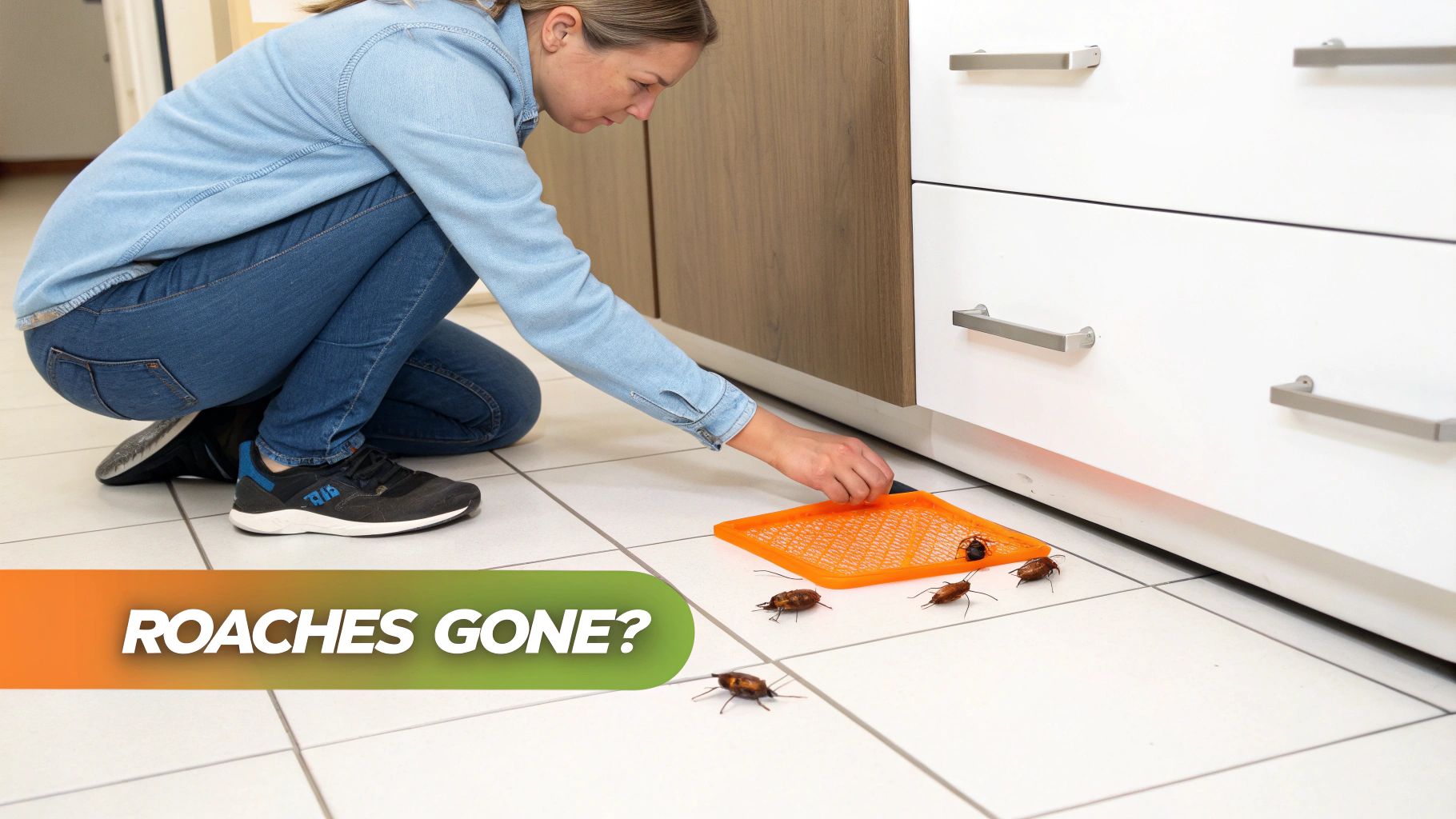
You stop seeing roaches scuttling across the floor. So, is the battle finally won? Not so fast.
Winning isn't just about not seeing live roaches for a day or two. Real success is knowing the entire colony has been wiped out, and that means looking for the right signs that your efforts are truly working.
After weeks of baiting, cleaning, and sealing cracks, it’s easy to let your guard down. But this is actually the most critical phase: monitoring. If you don't, a few survivors can quietly rebuild their population, and you’ll be right back where you started in a few months.
The First Signs Your Plan Is Working
Oddly enough, the very first sign of success is often seeing more dead roaches. As baits start working their way through the colony, you’ll find them belly-up under sinks or behind the fridge. This is a good thing. It means the poison is doing its job.
Another solid indicator is a sharp drop in live sightings, especially at night. Remember flipping on the kitchen light and seeing a half-dozen scatter? If you do that now and only see one—or none at all—you're definitely on the right track.
Finally, you should find less physical evidence. That means fewer new droppings (the stuff that looks like black pepper or coffee grounds) in your cabinets and along the baseboards.
The Realistic Timeline for Elimination
Pest control requires patience. You're not just killing the roaches you can see; you have to break their entire life cycle, and that doesn't happen overnight.
Here’s a general timeline of what to expect:
- Week 1: You should notice a major drop in activity within the first few days of using gel baits or professional treatments. Expect to find a lot of dead or dying roaches during this time.
- Weeks 2-4: Seeing a live roach should become a rare event. By now, the poison has reached the deepest parts of the colony, and insect growth regulators (IGRs) are stopping nymphs from growing up.
- Month 2 and Beyond: At this point, you should see almost no evidence of roaches. This is when you can start to feel confident the core infestation is gone.
If you’re still seeing consistent roach activity after a month, it’s a red flag that the problem is too big for DIY methods alone. Don't wait for it to get worse. Call +1 855 224 3071 for a professional follow-up.
Using Sticky Traps as Your Final Exam
So, how do you get definitive proof they're gone for good? The answer is simple and cheap: sticky traps. While they aren't a great tool for how to get rid of cockroaches, they are the absolute best tool for monitoring.
Think of them as your little surveillance team. Place them in the same hotspots where you saw activity before—under the sink, behind the fridge, and in the dark corners of cabinets.
Check them once a week. Here's how to read the results:
- Weeks 1-2: You’ll probably catch a few stragglers. This is normal.
- Weeks 3-4: The traps should be catching far fewer roaches, if any at all.
- One Full Month: If your traps stay completely empty for 30 consecutive days, you can confidently declare victory.
This monitoring step is your final confirmation. The resilience of these pests is why the global cockroach control market was valued at around $2.1 billion in 2023. It’s a massive industry because roaches are just that tough. You can read more about these market findings on dataintelo.com.
The biggest mistake you can make is stopping your prevention efforts too soon. Even after the roaches are gone, you must maintain your sanitation and exclusion habits. Keep food sealed, sinks dry, and cracks caulked.
This process isn't just about killing roaches; it's about making your home an environment where they can never thrive again. If you've done everything and still have doubts, a final professional inspection can offer complete peace of mind. Call +1 855 224 3071 to schedule one today.
Common Questions About Cockroach Removal
It’s a common myth that you need to douse your home in toxic, powerful sprays to get rid of cockroaches. Most people jump straight to harsh chemicals, thinking it’s the only way. The truth? The most effective, long-term solutions are much smarter than that.
Real success comes from knowing how roaches think and systematically taking away everything they need to survive. If your question isn't answered below, or you just need to talk to a pro, we're here to help. Just Call +1 855 224 3071 for immediate support.
Can I Get Rid of Cockroaches Permanently
Yes, a roach-free home is absolutely achievable for good. But here’s the catch: "permanent" removal means a permanent change in habits. It's a two-front war: an aggressive initial cleanout followed by consistent, long-term prevention.
Once you’ve wiped out the current colony, the real job starts. Roaches will come back if you roll out the welcome mat again. This means relentless sanitation, controlling moisture, and keeping every possible entry point sealed is non-negotiable if you want to stay roach-free.
Are Natural or Homemade Remedies Effective
Some DIY remedies can knock down a few scouts here and there. A classic mix of boric acid and sugar can kill individual roaches that eat it, and diatomaceous earth dehydrates any that crawl through it.
But let's be honest—these methods are rarely strong enough to wipe out a full-blown infestation. They just can't reach the deep, hidden nests where the colony is breeding out of control. They might feel like a decent first step, but they lack the colony-killing punch of professional-grade baits or a targeted treatment plan.
Key Takeaway: For one or two roaches, a DIY remedy might be enough. For a real infestation, you need a much stronger strategy to get rid of them completely.
How Long Does It Take to Eliminate an Infestation
There's no magic wand here. The timeline for getting rid of cockroaches depends entirely on how bad the problem is, and you have to be patient.
- Small Infestations: If you caught it early, you might get it under control with aggressive DIY baiting and sanitation within one to two weeks.
- Moderate to Severe Infestations: For an entrenched colony, settle in for a longer fight. It can easily take several weeks or even a few months to completely break the life cycle of eggs, nymphs, and adults. This almost always requires multiple, targeted professional treatments.
If you aren't seeing a major drop in roach sightings after a few weeks, that’s your signal to call for backup. Don't let the problem spiral—Call +1 855 224 3071 to connect with a professional who can get it done right and guarantee the results.
What Is the Main Thing That Attracts Roaches
Roaches need water and shelter, but the #1 thing that brings them into your home is easy access to food. It’s the primary reason for nearly every infestation.
Even tiny crumbs on the counter, a small grease spot behind the stove, or pet food left out overnight is like a five-star buffet for a roach. This is exactly why obsessive cleaning is the foundation of any roach control plan. Cut off their food supply, and you make your home a place they have no reason to be.
If you're tired of battling cockroaches and need a reliable, fast solution, Pest Control Service Finder is here to help. We connect you with vetted, local exterminators who can handle any infestation, big or small. Don't wait for the problem to get worse. Visit https://pestcontrol-service-finder.com or call us now for immediate assistance.